Whether you’re seeing ants in your kitchen or hearing scratching in the attic, your first thought might be: “Can I fix this myself?”
It’s a fair question, especially when you’re trying to cut costs or feel handy around the house. However, when it comes to choosing between DIY pest control and professional help, the correct answer depends on the type of pest, the extent of the problem, and your long-term objectives.
This guide breaks down both sides, what you can realistically handle on your own, and when it’s smarter to call in a professional pest control company.
Key Takeaways
- DIY pest control can work for mild, short-term pest issues, but larger infestations often require professional intervention.
- Professional pest control services provide in-depth inspections, targeted treatment plans, and long-term prevention strategies.
- Cost savings from DIY methods can be misleading if you’re treating symptoms instead of the root cause.
- In Central Texas, where termites, roaches, and rodents are common, localized expertise is a significant advantage.
What To Know Before Taking the DIY Route
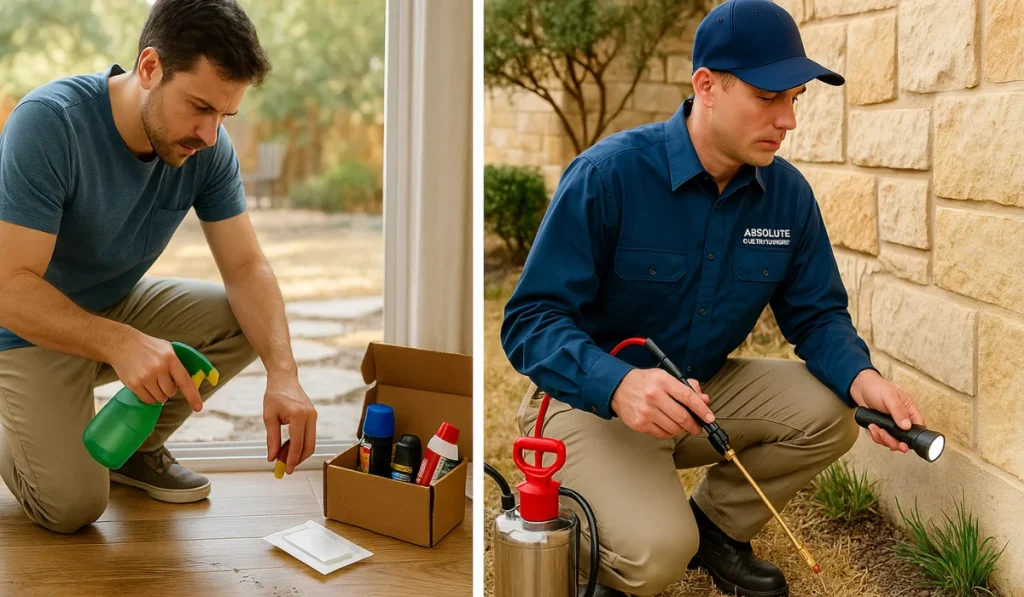
DIY pest control may appeal to homeowners who enjoy hands-on projects or need quick solutions. It’s common to try your pest control first, especially for issues like ants in the kitchen or a few wasps around the patio. Most hardware stores sell baits, sprays, and traps that are easy to use and apply. But there’s a difference between managing a minor annoyance and eliminating a recurring pest problem.
When using DIY pest control methods, consistency and a basic understanding of the pest control products you’re applying are essential. Misusing them can not only be ineffective, but it may even make the infestation worse by driving pests deeper into your home.
Some people also rely on online videos or social media “hacks,” which often fail to address long-term solutions.
If you’re going the do-it-yourself route, make sure you’re tracking results, following all safety instructions, and staying realistic about when it’s time to escalate. DIY isn’t wrong, it’s just limited in scope. While it can be a cost-effective choice for minor issues, it’s not always the best option for larger infestations.
The Limits of DIY Pest Control Methods
Many DIY pest control solutions are marketed as quick fixes, but pest control is rarely a one-and-done solution. You might eliminate the visible bugs, but without targeting where they live or breed, you’ll be back to square one.
Let’s say you’re battling roaches. You spray and see fewer for a few days, but without removing access to food, water, and shelter, they’ll return and breed behind your walls. Rodents are even trickier. They avoid new traps, reproduce fast, and chew through materials to regain access. Without sealing entry points and knowing rodent behavior, traps alone won’t solve your issue.
With termites, surface-level bait or spray from a home improvement store may feel proactive, but it won’t eliminate the colony. These insects often nest underground or in wall voids, where you can’t reach.
A DIY approach has the potential to delay action, allowing pests to multiply and cause more damage. If the same pest keeps showing up, it’s not just persistence; it’s a sign your methods aren’t working.
This is especially true for common pests, such as ants, spiders, and silverfish, which often signal a deeper problem when they return repeatedly. Some homeowners use natural options, such as diatomaceous earth, which can dehydrate crawling insects; however, it’s most effective as part of a larger treatment strategy, rather than a standalone fix.
When Professional Pest Control Is Worth It
There’s a reason professional pest control services exist. Licensed technicians are trained to recognize pest patterns, behaviors, and nesting habits that the average homeowner may not be able to spot. They also have access to tools and treatment strategies you won’t find on store shelves.
More importantly, professionals don’t just treat the surface. They inspect for moisture, droppings, chew marks, and other clues to identify how pests are entering and why they’re staying. A sound technician treats the problem and helps you prevent future infestations.
At Absolute Pest Management, for example, our team doesn’t just focus on eliminating bugs.
We use an integrated pest management (IPM) approach. That means using targeted treatments with as little disruption to your home as possible.
Hiring a professional pest control company may cost more upfront, but the value lies in results that last.
You also avoid repeated spending on over-the-counter products that may only mask the problem. When safety, health, or your home’s structure is at risk, the decision becomes clearer: professional help is worth it.
Comparing DIY and Professional Pest Control
At first glance, DIY pest control appears to be cheaper, quicker, and more immediate. But if you’re spending time and money every few weeks, the “budget-friendly” approach quickly adds up.
Professional treatment often comes with follow-ups, warranties, and education that empower you to keep pests away for good. Professionals also adapt therapy to the specific pests on your property and use data from inspections to determine what’s working and what’s not.
DIY can be hit or miss. If you’re trying peppermint oil for ants, diatomaceous earth for silverfish, and a homemade trap for rodents, but still have pests after a month, the comparison becomes less about cost and more about effectiveness and peace of mind.
In Central Texas, where seasonal pest activity varies dramatically, flexibility and professional experience go a long way.
Signs That DIY Isn’t Enough
How do you know when to stop trying DIY? Recurring infestations are the most significant sign. If you’re seeing the same type of bug or rodent despite regular treatment, it’s time for backup.
Other red flags include spotting pests during the day (a sign of overcrowding), finding droppings or chewed materials, or discovering baby pests, like tiny bed bugs or rodent pups. These are clues that pests have moved from occasional visitors to active residents.
Sometimes, DIY creates false confidence. You may kill a few wasps, but miss the hidden nest in your attic eaves. Or you might spray over-the-counter repellents and think you’re protected, only to find chewed wires or droppings weeks later.
When you’ve tried multiple diy treatments and can’t figure out why the problem keeps returning, that’s your cue. It’s not about failure, it’s about knowing when the issue is bigger than a bottle of spray can solve.
Choosing the Right Professional
You don’t want just any exterminator. You want someone who knows the area, communicates clearly, and shows up ready to work, not just spray and go.
Ask whether the company specializes in pest control treatment for your specific concern, whether that’s termites, wasps, or rodents. A good company will walk you through their inspection findings, explain your options, and set realistic expectations.
At Absolute Pest Management, our Austin-based team handles pests common to the region. That means we understand how weather, landscaping, and even construction style affect pest behavior.
We also tailor service to your home and family, because a condo in Travis Heights doesn’t need the same plan as a ranch house in Driftwood.
Most importantly, the right professional listens to you. They educate you on pest prevention, point out structural risks, and help you feel in control. A one-time spray might work today, but a technician who enables you to keep pests out for good? That’s value.
Final Thoughts
Trying the DIY route makes sense for minor issues, like a few ants near a window or a single wasp nest outside. But persistent infestations, hidden nests, or hard-to-reach areas require more than online advice and over-the-counter sprays.
In Central Texas, where warm weather keeps pests active nearly all year, taking chances on diy pest control can lead to costly delays.
At Absolute Pest Management, we’re more than just your local exterminator. We’re your neighbors, too. We are familiar with the pests that are active in Austin’s neighborhoods, and we know how to manage them effectively. Reach out to us and receive a complimentary quote if you’re ready to stop guessing and start achieving results.
FAQs
Can I combine DIY and professional treatments?
Yes. Many professionals encourage a hybrid approach. They may suggest you monitor traps, store food properly, or patch gaps while they handle the complex treatments.
Are professional treatments safe for pets?
Yes, when applied by licensed experts. Technicians use products safely and may recommend temporarily relocating pets for added caution.
How long does professional pest control last?
It depends on the pest. General pest control often lasts 60–90 days. Termite and rodent services may require quarterly or seasonal visits for best results.
Is professional pest control worth it?
Suppose you’ve already spent money on multiple DIY pest control products or are dealing with health risks, yes. Professionals resolve the issue faster and more thoroughly.
