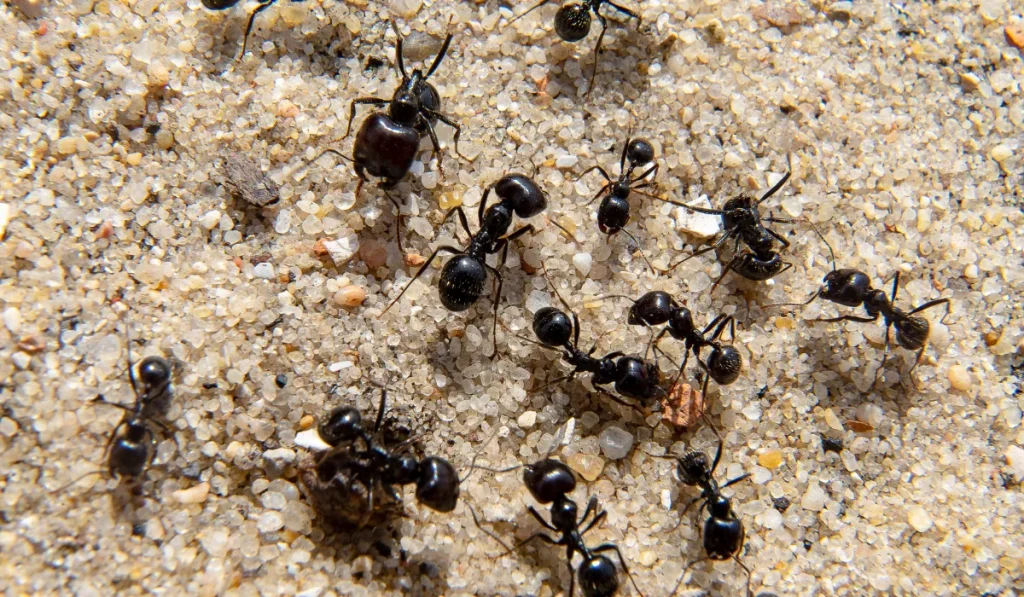
Ants are persistent. Once they settle into your yard, getting rid of them can feel like a never-ending battle.
In Austin, Texas, where warm weather and steady food sources make ideal conditions, ant colonies flourish year-round. From fire ants to carpenter ants, these critters don’t just ruin your lawn; they can pose risks to your home, pets, and family.
If you’re dealing with an ant infestation in your Austin yard, this guide will walk you through the reasons ants thrive here, the signs of a growing colony, and how you can stop the problem before it gets worse.
Key Takeaways
- Austin’s climate and environment make it a prime target for ant colonies.
- Fire ants and carpenter ants are the most common and troublesome species in Texas yards.
- Food sources like pet food, compost, and crumbs can invite an infestation.
- Professional pest control helps you tackle stubborn colonies and prevent their return.
Why Ants Love Austin Yards
Texas ants are no strangers to heat. In Austin, warm soil, frequent rain, and access to food sources create perfect nesting conditions. Ants build their colonies underground or in damp wood, depending on the species. Many homeowners notice increased activity during spring and fall, prime times for ant reproduction.
Yards with mulch beds, outdoor pet bowls, or compost bins are especially appealing. Once established, an ant colony can grow rapidly, creating tunnels and satellite nests across your property.
Common Types of Ants in Austin
Fire Ants
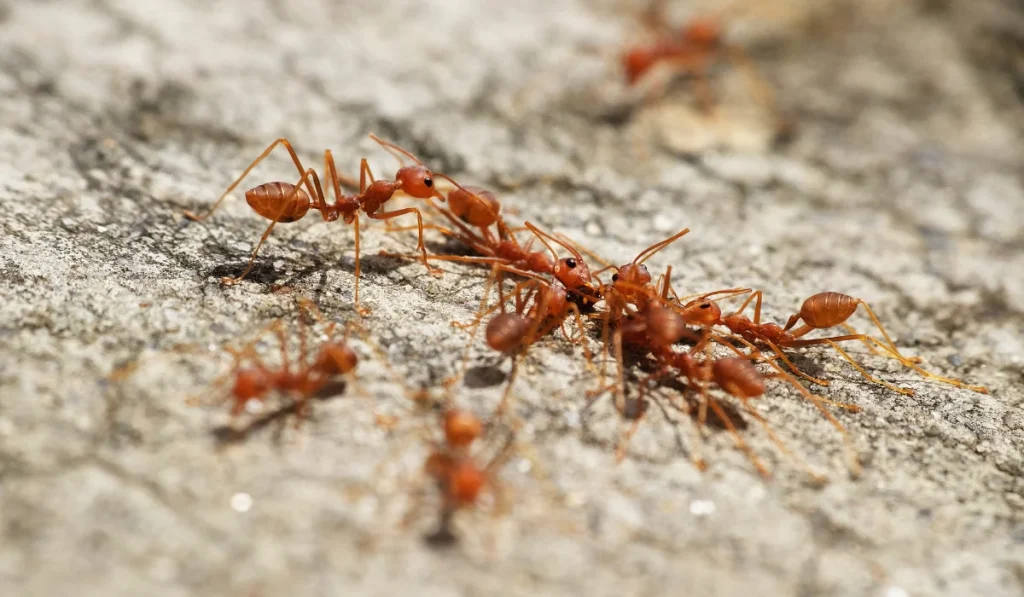
Fire ants are a significant concern for Austin homeowners. Their reddish-brown color and large, dome-shaped mounds are easy to spot. Unfortunately, so are their painful stings. These aggressive ants defend their nests and can trigger allergic reactions.
Carpenter Ants
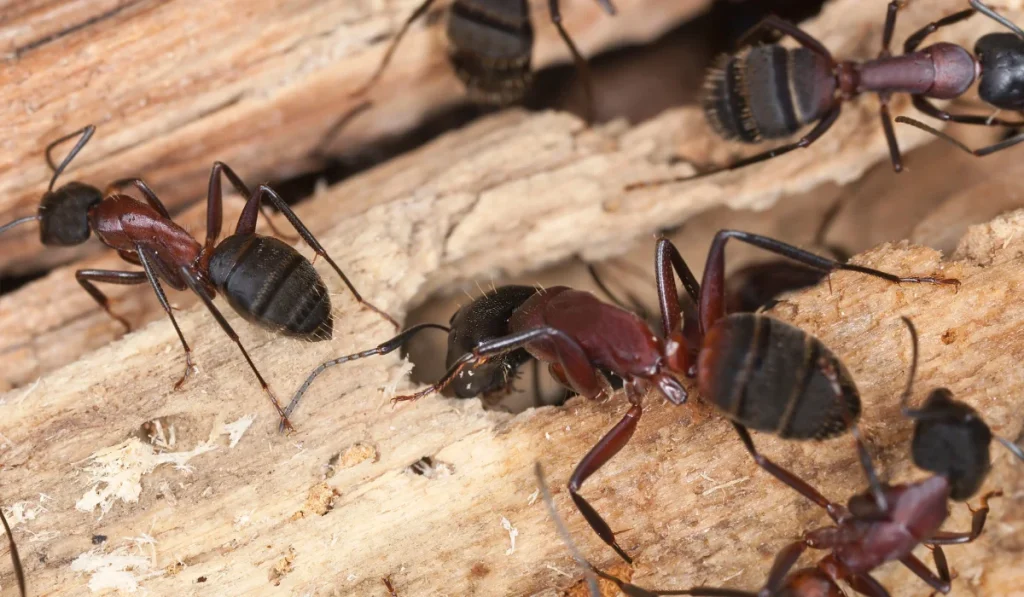
Carpenter ants tunnel through wood to build their nests. While they don’t eat the wood like termites, their activity can still weaken structures. If you have damp or rotting wood near your home, you may unknowingly be inviting them in.
Crazy Ants
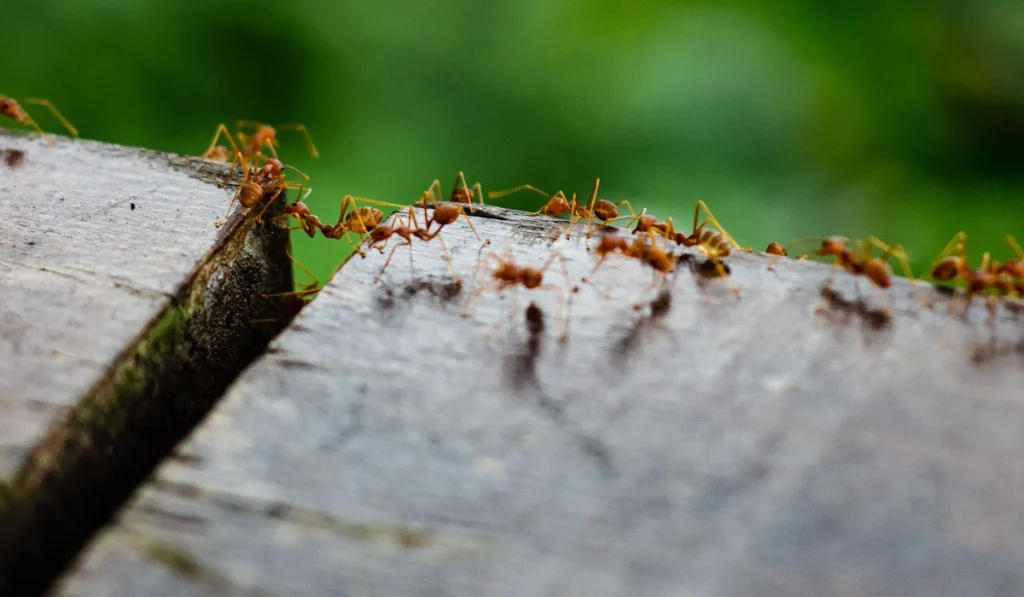
Known for their erratic movements, crazy ants are minor but no less annoying. They often infiltrate homes in large numbers and can overwhelm outdoor electrical equipment, causing short circuits.
Acrobat Ants
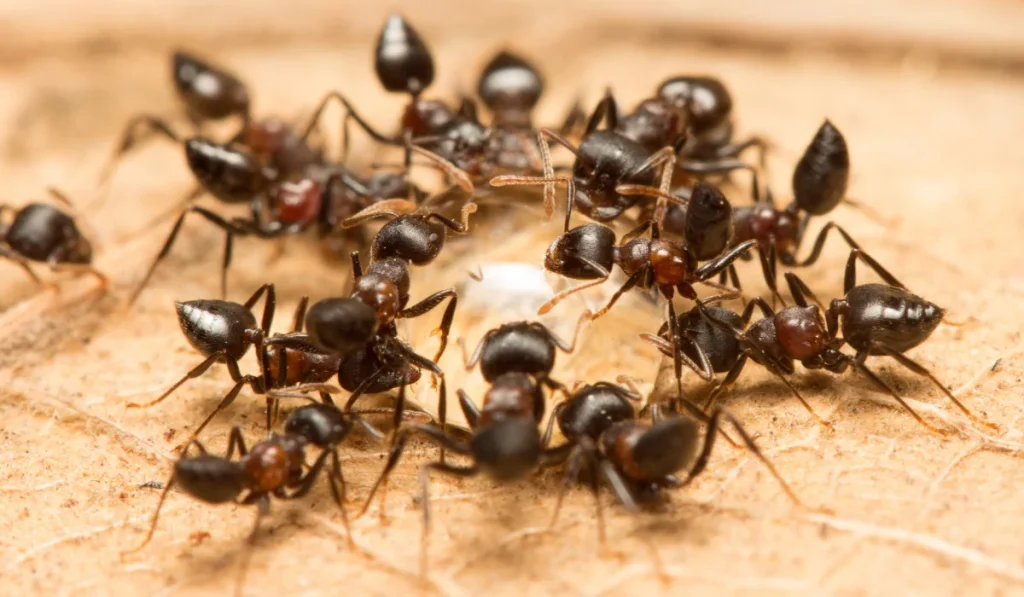
Acrobat ants get their name from their habit of raising their abdomen above their head when disturbed. They often nest in wall voids or insulation and can be a sign of moisture issues inside the home.
🐜 Quick Summary: Common Ants in Austin Yards
| Ant Type | Behavior | Where They Nest | Risk Level |
|---|---|---|---|
| Fire Ants | Aggressive; delivers painful stings | Large soil mounds in open, sunny areas | 🔴 High — painful, allergic stings |
| Carpenter Ants | Tunnel through damp or rotting wood | Inside wood structures, tree stumps | 🟠 Medium — structural damage |
| Crazy Ants | Move erratically; infest electronics | Under mulch, in walls, around wiring | 🟡 Medium — electrical damage |
| Acrobat Ants | Raise the abdomen when disturbed | Wall voids, insulation, and moist wood | 🟡 Low — minor nuisance indoors |
How Ant Colonies Start and Spread
Most ant infestations begin when a queen ant finds a good spot to start a colony. Once settled, she lays eggs while worker ants build tunnels, gather food, and protect the nest. In many cases, ants create satellite colonies connected by underground tunnels.
Ants communicate using pheromones, so once a food source is discovered, like spilled pet food or open trash, it doesn’t take long for the entire colony to mobilize.
Signs You Have an Ant Infestation
Not all ant problems start indoors. Here’s what to look for in your yard:
- Dirt mounds or fire ant mounds are scattered across your lawn.
- Trails of black ants move between the house and the yard.
- Ants are swarming trash cans or compost piles.
- Moisture-damaged wood with sawdust piles nearby (a red flag for carpenter ants).
- Pets react to ant bites or stings during play.
How to Get Rid of Ants in Your Yard
Eliminate Food Sources
To get rid of ants, start by removing what attracts ants in the first place. Store pet food in sealed containers, clean up food scraps after outdoor gatherings, and secure trash bins. Don’t forget to rinse recyclables; ants love sugary residue.
Break Up the Colony
Over-the-counter baits can help, but only if they reach the queen. Baiting is more effective than surface sprays because it lets workers carry the poison back to the nest. However, fire ant control often requires specialized treatment.
Control Moisture and Shelter
Keep mulch at least a foot away from your home’s foundation. Fix leaky hoses or irrigation systems. Trim bushes and remove yard debris where ants might nest.
Know When to Call a Professional
When colonies spread or ants start invading your home, it’s time to bring in pest control services. A local pest control company like Absolute Pest Management can identify the type of ants in your yard, locate nests, and apply targeted ant extermination treatments.
With expert knowledge of Texas pests, we use integrated pest management strategies to ensure long-term protection for Austin homes.
Preventing Future Ant Problems
Ongoing pest management is key. Here’s how to keep your yard ant-free:
- Schedule seasonal pest control treatments, especially during spring and fall.
- Seal cracks in your home’s foundation and siding.
- Store food indoors in airtight containers.
- Maintain clean outdoor areas with no standing water or food waste.
- Use proper lawn care to avoid creating ideal nesting environments.
If you live in Austin or nearby areas, our pest control solutions are tailored to local conditions, as we know the best ways to get rid of ants. Whether it’s fire ant infestations or carpenter ants threatening your deck, we’ve got you covered.
Why DIY Methods Often Fall Short
Ant control isn’t one-size-fits-all. Some species split their colonies when threatened, making surface sprays worse than doing nothing. Others ignore bait entirely if it’s not the right kind. Without knowing which species you’re dealing with, DIY methods can waste time and money.
Professionals bring experience, proper identification, and access to stronger, more effective treatments. Just give us a call, and our team will provide you with a free quote after inspecting your entire property, addressing current activity, and helping prevent new infestations from forming.
FAQs
What attracts ants to my yard in Austin?
Ants are drawn to food sources like pet food, compost, sugary drinks, and grease. Moisture, mulch, and shaded areas also provide ideal nesting conditions in Austin’s climate.
How dangerous are fire ant stings?
Fire ants can deliver painful stings that cause itching, swelling, and in some cases, allergic reactions. If disturbed, fire ant colonies attack aggressively and in large numbers.
What’s the best way to control ants long-term?
Consistent pest control, proper food storage, yard maintenance, and sealing home entry points are key. Professional treatments help control colonies at the source.
