

No one likes finding a trail of ants crawling across the kitchen counter. But in Texas, where ant populations thrive year-round, it’s more than just an annoyance; it can quickly become a bigger problem. These ants don’t just come for crumbs; they build colonies in walls, floors, and even electronics.
Black ants are a common sight in Texas homes, especially during the warmer months. While they might seem harmless at first, ignoring them can lead to full-blown ant infestations that are tough to manage. Whether you’re in Austin, Houston, or a smaller town in between, understanding the types of ants you’re dealing with and how to keep them out is key to protecting your home.
In this guide, we’ll walk through how to identify black ants, why they show up in your space, and the best methods for ant control that work here in Texas.
Key Takeaways
- Black ants in Texas often include species like little black ants, odorous house ants, and carpenter ants, each with unique behaviors and treatment needs.
- Food, moisture, and shelter are the main reasons ants invade homes, especially in kitchens, bathrooms, and wall voids.
- Eliminating ant trails, sealing entry points, and using bait are effective steps for control and prevention.
- Professional pest control is essential for stubborn infestations, especially when carpenter ants threaten your home’s structure.
What are black ants, and why are they in your house?
“Black ants” is a broad term, but in Texas, it often refers to species like little black ants, odorous house ants, or even carpenter ants, all of which range in color from black to dark brown. Little black ants are tiny (around 1.5 mm long), while carpenter ants are much larger and can cause damage to wood structures.
You’ll typically find these ants trailing in large numbers near food sources or moisture, which is why they love kitchens, bathrooms, and even wall voids. They’re drawn to sugary spills, pet food, and even the honeydew secreted by aphids on indoor potted plants.
How to tell if you have a black ant problem
If you’ve noticed ants crawling along countertops or disappearing into crevices, chances are there’s an ant nest nearby. Here are a few signs you’re dealing with a growing ant infestation:
- Trails of ants heading to a food source
- Small piles of what looks like sawdust (a sign of carpenter ants)
- A faint, rotten coconut smell (typical of odorous house ants)
- Tiny holes or cracks near baseboards or windowsills
Carpenter ants, in particular, are worth taking seriously, as they hollow out wood to build their ant colonies. This can weaken structural elements over time, much like termites.
The most common black ants in Texas homes
Knowing which species of ants you’re dealing with helps you treat the issue properly. Here are a few of the usual suspects:
- Little black ants: Tiny, shiny black, and often found in long trails indoors. They nest in wall voids and under rocks or mulch.
- Odorous house ants: Emit a strange smell when crushed. Thrive indoors and are especially active during wet weather.
- Carpenter ants: Large, dark ants that can cause structural damage. They don’t eat wood, but they do tunnel through it to build nests.
- Crazy ants: Erratic in movement and tough to control. Known for infesting electronics and nesting in odd places like attics or crawl spaces.
How to control black ants in your home
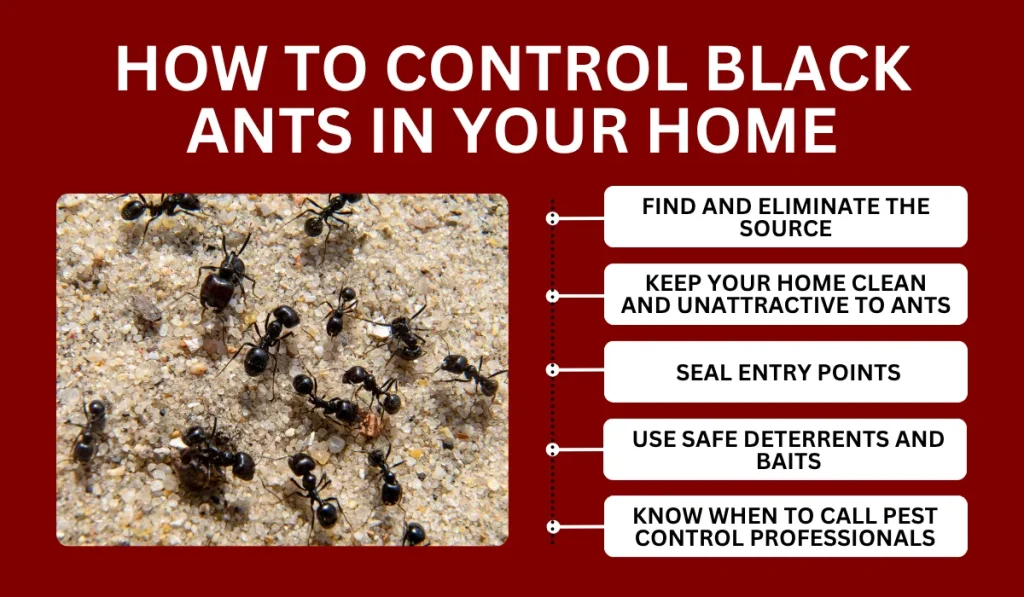
Controlling black ants means getting rid of the current problem and preventing future ones. Here’s how you can do both:
1. Find and eliminate the source
Follow the ant trail to see where they’re coming from. Once you locate the entry point or nest, you can target your treatment more effectively. This might be a crack in the wall, a gap under a window, or even a potted plant that’s become their new hangout.
2. Keep your home clean and unattractive to ants
Ants are constantly looking for food and water. Here’s how to cut off their supply:
- Wipe down counters and sweep floors daily.
- Store pantry items in airtight containers.
- Fix leaks and remove standing water near sinks and drains.
- Take out trash regularly and keep bins sealed.
3. Seal entry points
Use caulk to seal crevices, gaps around windows and doors, and other openings. Don’t forget areas around plumbing or electrical lines that lead into your home.
4. Use safe deterrents and baits
Rather than trying to kill every ant you see, it’s better to use bait that they take back to the colony. This helps eliminate the ant nest itself.
If you’d rather not use bait indoors, some homeowners use peppermint oil or vinegar-based sprays along entry points. These can confuse ants’ elbowed antennae, making it harder for them to navigate.
5. Know when to call pest control professionals
Some infestations are too stubborn for DIY methods. If you’ve tried the above and ants keep returning, or you suspect you’re dealing with carpenter ants or another invasive species, it’s time to bring in a local pest control expert.
Professionals will inspect your home thoroughly, including hidden areas like wall voids, to find and remove the colony. They’ll also help you build a plan for long-term pest management, especially if you’re dealing with multiple pest types like fire ants, acrobat ants, or pharaoh ants around your property.
Don’t ignore signs of black ants in your home
Black ants might seem like a minor issue, but left alone, they can become a serious ant problem. Some are just a nuisance, while others, like carpenter ants, can threaten the structure of your home.
If you’re seeing consistent trails, strange smells, or signs of nesting, it’s worth taking action sooner rather than later. And if the ants aren’t going away, or you’re not sure what species you’re dealing with, it’s smart to reach out for professional help.
At Absolute Pest Management in Austin, we’ve seen every kind of ant Texas has to offer. We’ll inspect your home, identify the species, and recommend a targeted plan to clear out the ants and keep them from coming back.If ants are taking over your kitchen or showing up around your baseboards, you don’t have to deal with them alone. Reach out, and we’ll help you get your home ant-free, starting with a simple inspection.
