
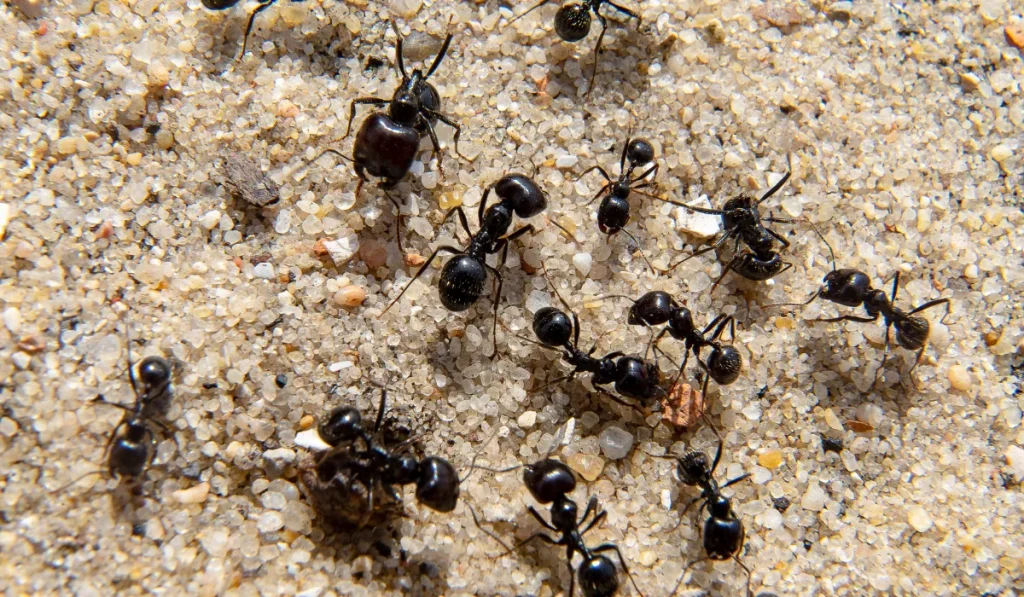
It happens to the best of us. You wake up, head to the kitchen, and there they are: tiny black ants marching in a line across your countertop. These little invaders can seem to come out of nowhere and quickly turn into a frustrating ant infestation if not addressed properly.
If you’re a Texas homeowner dealing with this issue, you’re not alone. The warm climate here in Austin, Houston, and beyond creates a perfect environment for many species of ants.
In this article, you’ll learn what types of ants you might be seeing, why they’re inside your home, and how to get rid of ants effectively.
Key takeaways
- Tiny black ants in Texas often include species like little black ants, odorous house ants, crazy ants, and rover ants.
- Ants enter homes searching for food, water, and shelter, often through unsealed entry points.
- Cleaning up food sources, sealing entry points, using ant baits, and managing moisture are effective DIY strategies.
- Persistent ant infestations may require professional pest control for long-term results.
Types of ants you might see in Texas
Not all tiny black ants in Texas are the same. Identifying what you’re dealing with helps you tackle the problem more efficiently. Here are some common ants you may encounter:
- Little black ants: As the name suggests, these are small and dark brown to black. They often nest in wall voids and around potted plants.
- Pharaoh ants: Small, yellowish to reddish-brown ants that form large colonies indoors.
- Crazy ants: Known for their erratic movement. They are dark brown to black and can nest in electrical equipment.
- Odorous house ants: Emit a rotten smell when crushed. They’re usually dark brown or black and nest near moisture.
- Rover ants: Very small and dark; often attracted to sweet food sources indoors.
You might also spot carpenter ants or fire ants around your property. Though they’re not considered tiny, they can contribute to broader ant problems.
Carpenter ants can cause structural damage by hollowing out wood, while fire ants can deliver painful stings and may form mounds in your yard.
Why tiny black ants invade your home
Ants enter your home in search of food sources, water, and shelter. In Texas, the long, hot summers drive ants indoors. Common reasons they show up include:
- Unsealed entry points around windows, doors, and foundation cracks
- Crumbs and spills on floors and countertops
- Moisture issues, such as leaky faucets or high humidity areas
- Nesting sites close to or inside your home
Once inside, ants communicate through pheromone trails, leading the entire colony to your kitchen or pantry.
Homes with potted plants indoors or near entryways can attract ants, as these plants often provide moisture and shelter. Mulch used in garden beds can also create ideal nesting conditions for ants around your home’s exterior.
How to get rid of tiny black ants
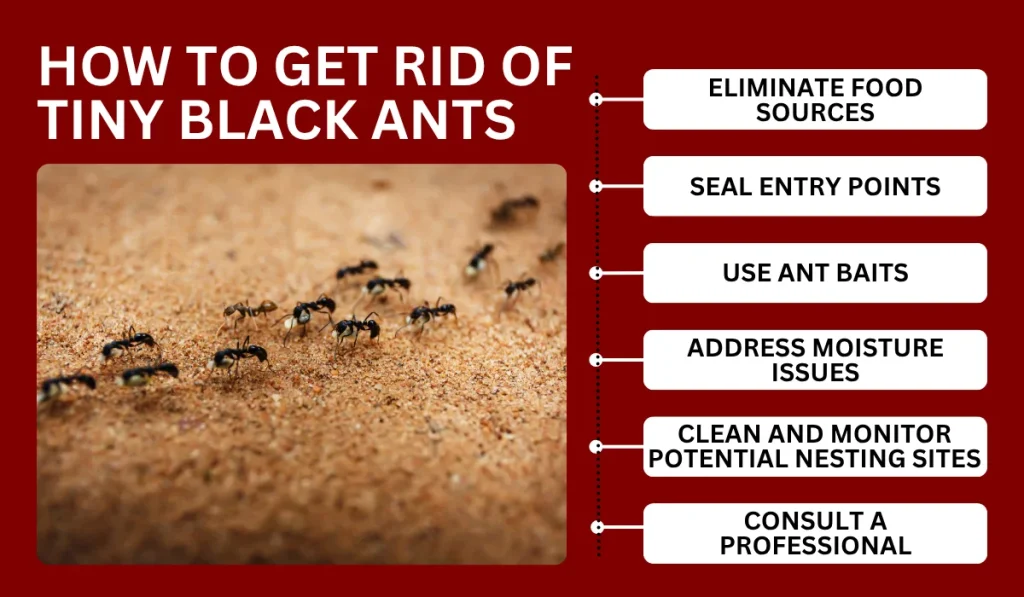
If you’re ready to take action, here are the best ways to get rid of ants and prevent future infestations.
1. Eliminate food sources
Clean your kitchen thoroughly. Wipe down countertops, sweep floors, and store food in airtight containers. Don’t forget to rinse recyclables and take out the trash regularly. Pay close attention to pet food bowls and crumbs around feeding areas, as these can be attractive food sources for ants.
2. Seal entry points
Inspect your home for gaps and crevices where ants may enter. Use caulk to seal these areas and weather stripping for doors and windows. Pay extra attention to areas where utility pipes enter your home; these are common ant highways.
3. Use ant baits
Ant baits work well because ants bring the bait back to the entire colony, targeting the source of the problem. Place ant baits near trails but out of reach of pets and children.
Different types of ants may respond to different baits. For example, sugar ants and rover ants are often attracted to sweet liquid baits, while pharaoh ants may prefer protein-based baits. Monitoring which bait works best can help you target the right species.
4. Address moisture issues
Repair leaks, use a dehumidifier in damp areas, and ensure good ventilation to make your home less inviting to ants. Addressing moisture problems not only discourages ants but also helps prevent other pests such as termites and bed bugs.
5. Clean and monitor potential nesting sites
Ants often establish nesting sites in hidden areas such as wall voids, behind appliances, or in cluttered storage spaces. Regular cleaning and decluttering can make these spots less attractive.
If you notice ants emerging from unusual locations like electrical outlets, light fixtures, or behind cabinets, it may indicate nesting in wall voids, a situation best handled by a professional.
6. Consult a professional
For stubborn infestations or if you suspect ants are nesting in wall voids or other hard-to-reach areas, it’s wise to call a pest control expert. An exterminator can identify the species of ants, locate nests, and apply targeted treatments safely and effectively.
Professional pest control services also provide ant control that extends beyond your home’s interior. Treating exterior areas, such as the yard and foundation, helps prevent reinfestation.
Why professional pest control makes a difference
Some ant infestations in Texas can be challenging to control on your own. Species like pharaoh ants and crazy ants form large ant colonies that require specific treatment strategies. A professional pest management plan considers the type of ant, their nesting habits, and safe control methods.
For example, acrobat ants can nest in decaying wood or insulation. If they move into your home, a professional can identify and remove their nesting site. Likewise, Argentine ants, known for forming supercolonies, require coordinated treatment across multiple properties to achieve lasting results.
At Absolute Pest Management, we know Texas ants. Whether you’re seeing small black ants in your kitchen or a growing infestation around your home, our team can help. We focus on eliminating the immediate problem and providing long-term solutions to keep your home ant-free.
Keep ants out for good
Tiny ants may be small, but they can cause big headaches. Understanding what attracts them and how to address their presence is key to keeping your home pest-free.
Remember, ants are always in search of food and moisture. By maintaining a clean home, sealing up entry points, and addressing environmental factors like mulch and potted plants, you can reduce the risk of another infestation.
If DIY efforts aren’t cutting it, reaching out for professional pest control services in Texas ensures you get to the root of the problem.
If you’re dealing with ants in your Austin or Houston home and want them gone for good, reach out to us for a free quote. We’ll help you build a strategy that works for your space and helps keep the ants where they belong: outside.
